Lights Up Your Past Memory with Untold History
There’s a particular feeling you get from a well-worn paperback, the kind where the pages are soft and the cover has a gentle curve to it. Or from finding a stack of old letters in a shoebox, the ink slightly feathered on the thick, creamy paper. It’s a sense of story, of time passed, of authenticity. That feeling is exactly what the Untold History font captures. It’s not just a set of letters; it’s a vessel for nostalgia, designed with the precision of modern typography to give your projects a soul.
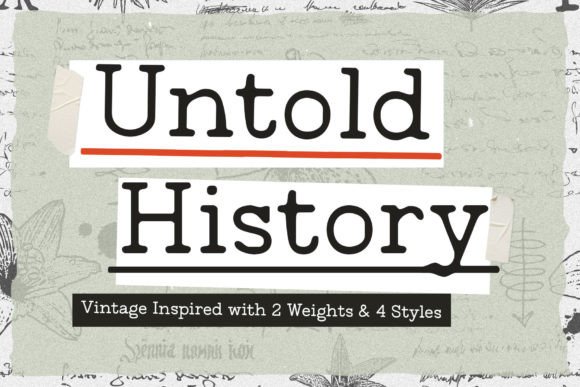
At its heart, Untold History is a classic typewriting font, but calling it that undersells its versatility. Yes, it’s inspired by the rhythmic clack of vintage typing machines, but it’s been thoughtfully crafted for today’s creative landscape. It comes in four distinct styles—regular, bold, underlined, and inky—each offering a different shade of its personality. The inky style, for instance, introduces a subtle ink bleed effect. It’s a small detail, but it makes a world of difference, lending a tangible, almost tactile quality to the letterforms that feels genuinely vintage, not just retro.
Where This Typeface Truly Shines
The real strength of a premium font like this lies in its application. Untold History isn’t a one-trick pony. Its character makes it a powerful tool for specific projects where emotion and heritage are key. Think of it as a display font with a narrative. It’s perfect for setting the tone in a headline, but its clarity also makes it workable for shorter blocks of text where you want to inject personality.
For designers and brand strategists, this is where it gets interesting. Imagine using it for the logo of a boutique coffee roaster, a heritage clothing brand, or an independent bookstore. It instantly communicates craft, authenticity, and a story worth telling. In editorial design, it can transform a magazine feature or a book cover, giving it a literary, thoughtful aesthetic. For packaging design, it can make a product feel handmade and special, like a limited-edition run of artisanal goods.
It translates beautifully across media. On social media graphics, a quote set in Untold History stops the scroll because it feels different from the usual sleek sans-serifs. For bloggers and content creators, it’s ideal for hero images, section headers, or even a stylized signature in a newsletter. Entrepreneurs can use it to craft a brand identity that feels established and trustworthy from day one, avoiding the generic look that can plague new ventures.
Making It Work: Practical Design Guidance
Choosing the right font is about fit, not just fashion. Untold History excels in projects that call for warmth, history, and a touch of imperfection. It’s less suited for a cutting-edge tech startup’s primary UI, but it could be a brilliant accent for a blog or a marketing campaign. The key is to evaluate the project’s core message. Does it involve storytelling, tradition, or craftsmanship? Then you’re in the right ballpark.
When you start using it, pay close attention to its styles. The regular weight is your workhorse for most applications. The bold provides emphasis without losing the typewriter character. The underlined style is a charming, period-appropriate way to highlight key phrases. And the inky variant? Use it sparingly for maximum impact—on a book title, a hero quote, or a branding element where that authentic, aged look is paramount. It’s a creative font, and like any good design asset, its power is in strategic deployment.
A critical step is testing font pairing. Because Untold History has such a strong personality, it often works best when paired with a clean, neutral companion. Try it with a simple sans-serif font for body text. The contrast creates a clear visual hierarchy: the typewriter font draws the eye and sets the mood, while the sans-serif ensures the supporting text remains highly readable. This pairing is a classic for a reason—it balances expression with function.
From a technical standpoint, the font’s PUA encoding is a practical benefit. It means all the unique glyphs and ligatures are fully accessible in any design software, not just in specialized applications. This makes your workflow smoother, whether you’re in Adobe Illustrator, Canva, or a desktop publishing program. You can access all the nuanced characters without jumping through hoops.
A Final Thought on Authenticity
In a world saturated with digital perfection, a font like Untold History offers a valuable counterpoint. It brings a human, handcrafted feel to digital and print projects alike. It doesn’t just decorate; it communicates. It tells your audience that you value substance, story, and a connection to the past. For designers, marketers, and creators looking to build a brand identity with depth, or for anyone crafting a personal project with meaning, it’s more than just a typeface—it’s a storytelling tool. Use it to give your next project a voice that feels both timeless and genuinely yours.